


Lean Manufacturing at JD Machine
Lean principles in place since 1998. Just In Time pull systems, 5S, and Continuous Improvement run the floor every day.
Lean Since 1998
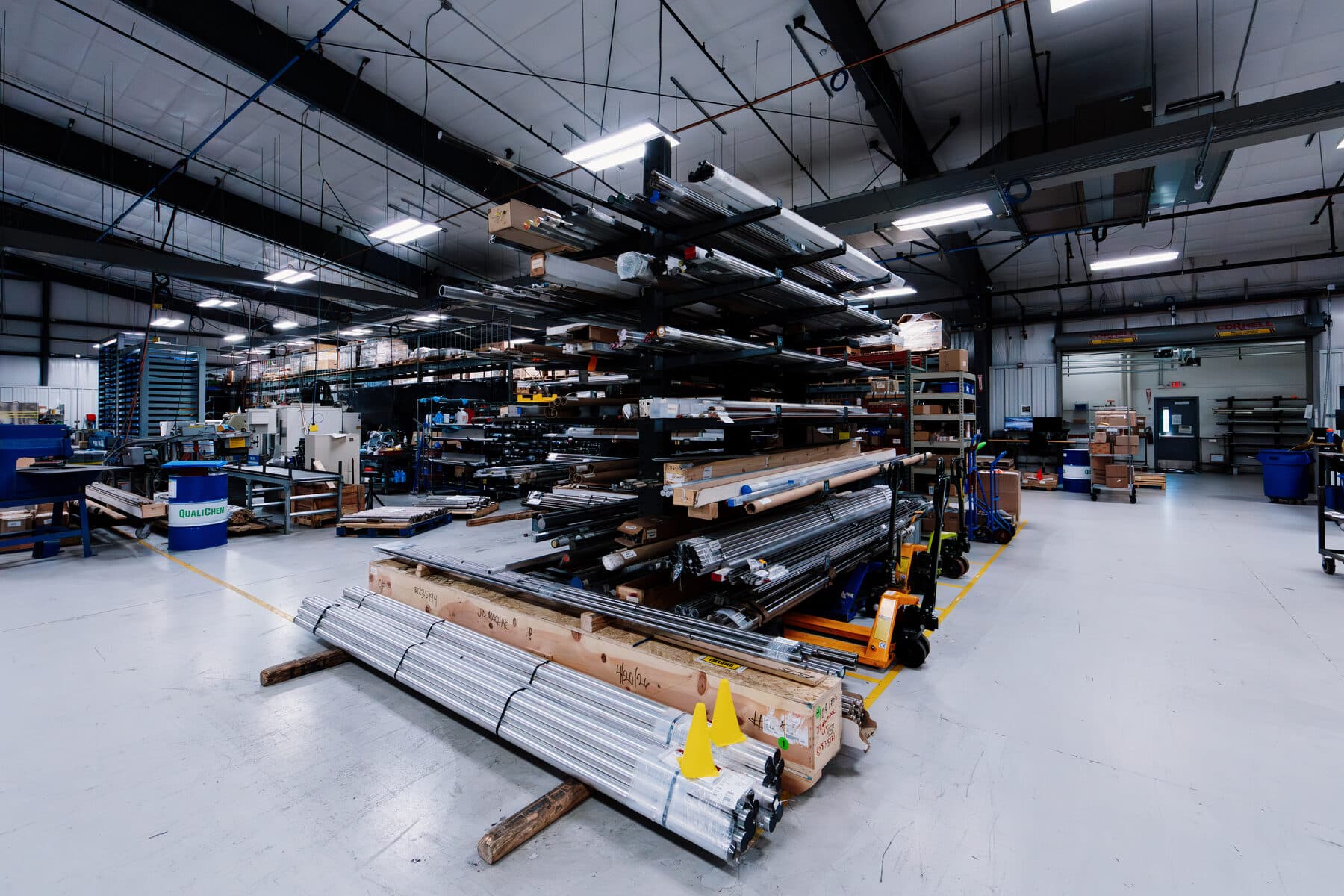
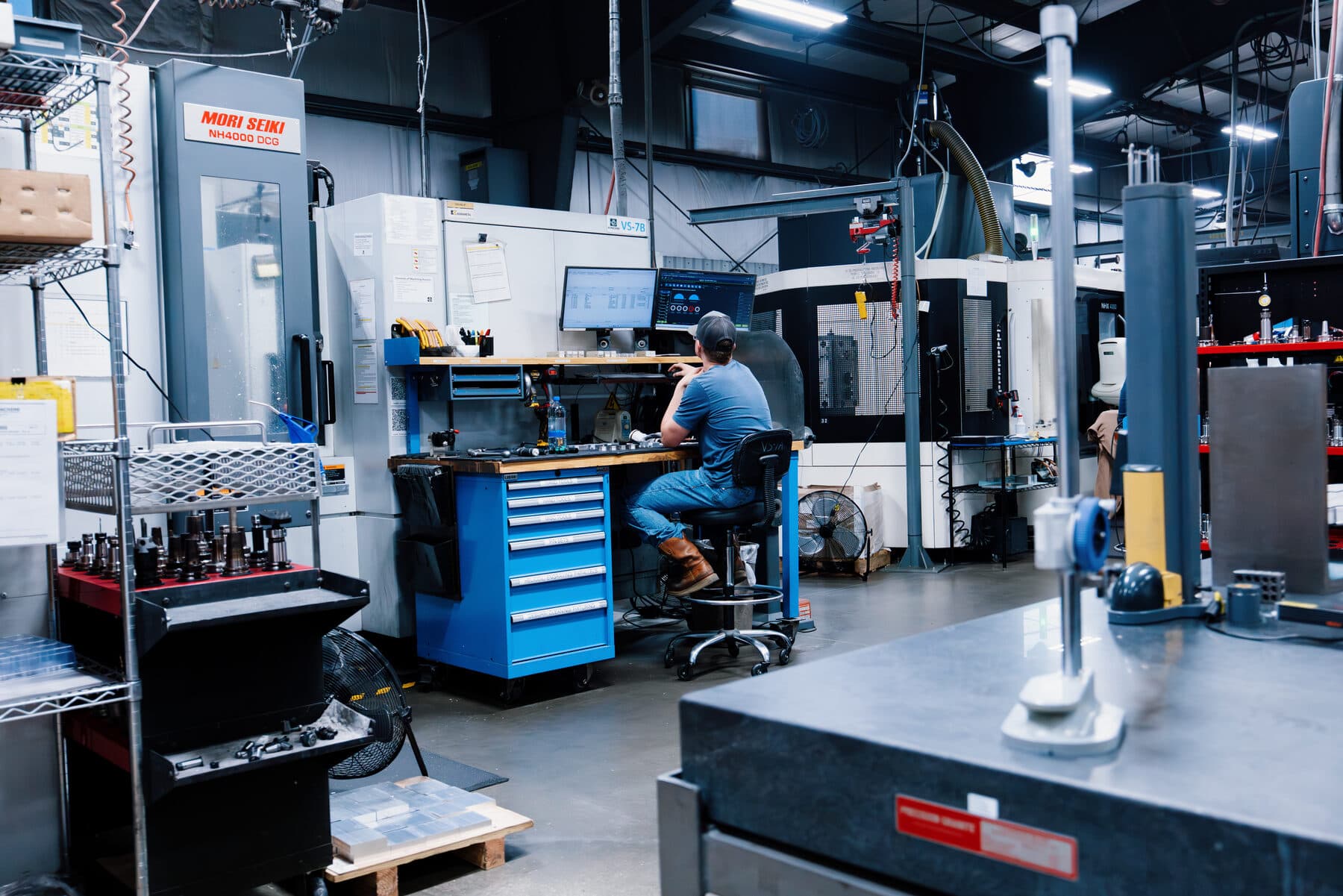
Lean manufacturing has been the operating model at JD Machine since 1998 - not as a quarterly initiative or a poster on the wall, but as the working method the shop runs by. Processes are engineered offline using CAD/CAM and CNC program simulation software, with up-to-the-minute OEE and throughput tracking on every machine. Standard Work Instructions and PFMEA govern assembly. The result is a quality system that catches issues upstream of the cutter, not downstream of a shipping label.
Lean at JD Machine is built around three named practices: Just In Time (JIT)/Pull System, 5S workplace organization, and Continuous Improvement. Each is implemented, audited, and owned by the team members doing the work.
The Three Practices
Just In Time (JIT)/Pull System
Production runs against physical and electronic Kanban build signals, not against forecast. Material moves through the shop in the right quantities, in the right sequence, at the right time. The downstream result for customers: daily deliveries, or whatever frequency the program requires, without inventory bulges or stockouts.
5S
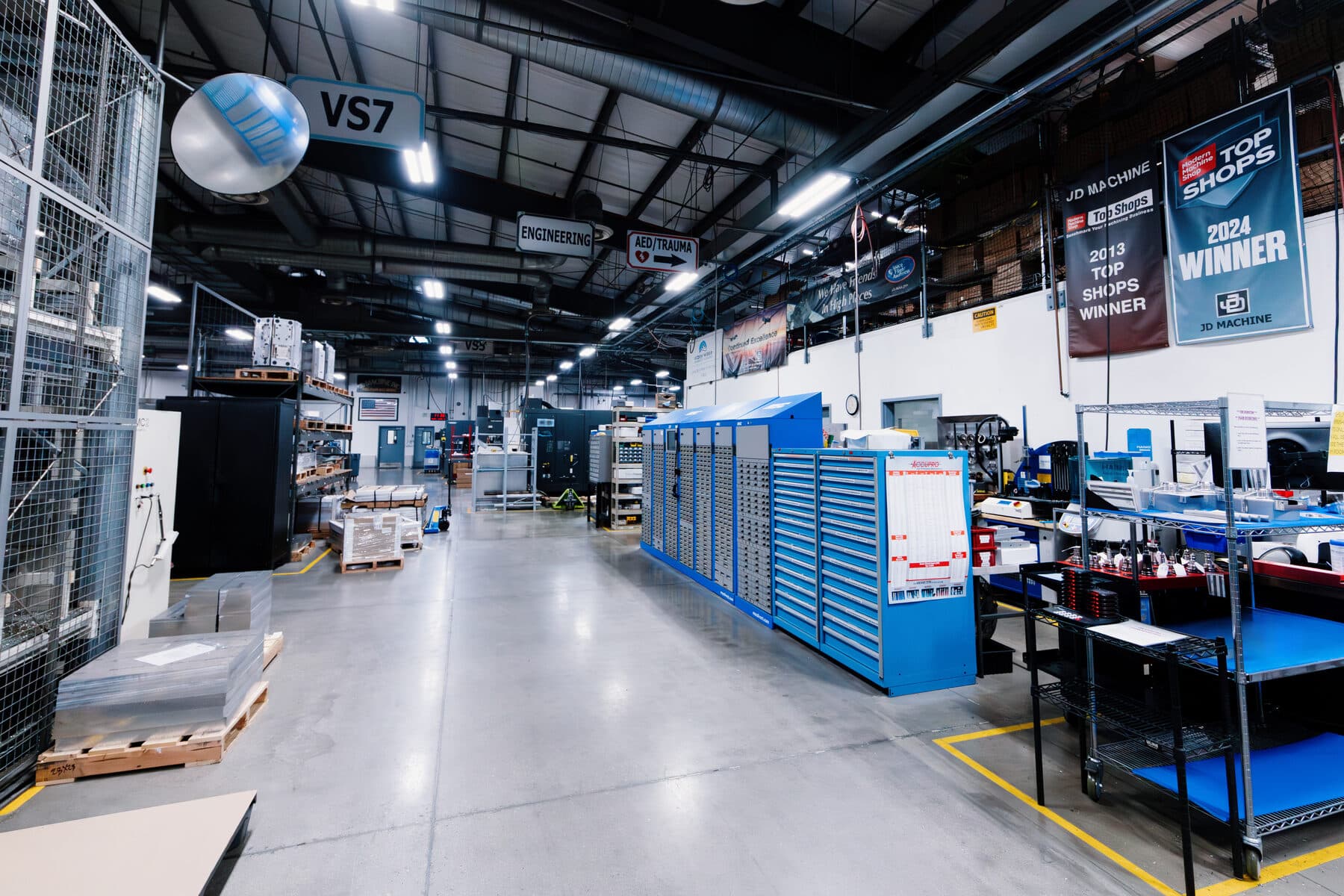
Sort, set in order, shine, standardize, sustain. Every workstation, tool crib, and quality area is organized to a standard that any team member can audit. The discipline keeps the shop fast: less time hunting for tooling, less time chasing setup variation, less time recovering from rework.
Continuous Improvement
Improvement is not an annual project. It's a daily practice across departments, with team members empowered to identify waste, propose fixes, and implement changes inside their own areas. The 99.6% customer quality rating sustained across 28 years is not a starting line. It's the cumulative result of small improvements compounding.
What Lean Delivers for Customers
Lean methodology shows up in three places customers can measure. First, manufacturing cost: offline engineering, tight setup discipline, and minimal waste keep the cost structure competitive on medium-to-high complexity production runs. Second, lead time: quote response in less than 1 business day, and production schedules that hold because the pull system stabilizes upstream variability. Third, quality: a 99.6% customer quality rating sustained across 28 years, with the integrated quality systems that make AS9100D and ISO 9001:2015 third-party registration possible.
The recognition follows the practice. JD Machine has been named Modern Machine Shop Top Shop twice and Utah Manufacturers Association Manufacturer of the Year, both grounded in the same lean operating model.
Lean Extended into Your Supply Chain
The internal lean practice extends into how we partner with customers. Through our Vendor Managed Inventory service, JD monitors customer inventory levels, replenishes inventory at the customer warehouse or point of use, and manages the production schedule at JD to ensure no schedule disruptions occur. JIT pull-system delivery, parts kitting, and assembly components management are available across the customer base. For long-term agreement customers, the result is fewer purchase orders to cut, less inventory to carry, and a single supplier accountable for keeping the line running.
Logistics & Supply ChainHow It's Sustained
Lean at JD Machine is sustained by three structures. OEE and throughput tracking on every machine, so variation is visible the day it appears. Standard Work Instructions and PFMEA governance, so process knowledge isn't carried in one person's head. And JDU, our U.S. Department of Labor Certified Apprenticeship Program, which trains journey-level machinists and fabricators in the same lean operating model they'll work in.
The combination is what makes the 28-year record durable. Lean is documented, measured, trained, and owned across 230+ team members. It doesn't depend on a single program manager or a single shift.
Build With a Lean Partner
Send a print, an RFQ, or a long-term agreement scope. Quote response in less than 1 business day.
(801) 782-4394Frequently Asked Questions
What lean manufacturing practices does JD Machine use?
Lean at JD Machine is built around three named practices: Just In Time (JIT)/Pull System driven by physical and electronic Kanban build signals, 5S workplace organization audited at every workstation, and Continuous Improvement practiced daily across departments. Each is implemented, audited, and owned by the team members doing the work.
How long has JD Machine practiced lean manufacturing?
Lean manufacturing has been the operating model at JD Machine since 1998 — not a quarterly initiative, but the working method the shop runs by, with processes engineered offline using CAD/CAM and CNC program simulation software and OEE tracked up-to-the-minute on every machine.
How does lean manufacturing benefit JD Machine customers?
Lean shows up in three places customers can measure: manufacturing cost, held competitive by offline engineering, tight setup discipline, and minimal waste; lead time, with quote response in less than 1 business day and production schedules stabilized by the pull system; and quality, with a 99.6% customer quality rating sustained across 28 years.
How does JD Machine extend lean into a customer's supply chain?
Through Vendor Managed Inventory, JD monitors customer inventory levels, replenishes inventory at the customer warehouse or point of use, and manages the production schedule at JD to ensure no schedule disruptions occur. JIT pull-system delivery, parts kitting, and assembly components management are available across the customer base.
How is lean manufacturing sustained at JD Machine?
Three structures: OEE and throughput tracking on every machine so variation is visible the day it appears; Standard Work Instructions and PFMEA governance so process knowledge isn't carried in one person's head; and JDU, our U.S. Department of Labor Certified Apprenticeship Program, which trains journey-level machinists and fabricators in the same lean operating model they'll work in.