


Assembly and Testing Services Built for Regulated Manufacturing
JD Machine runs the full flow inside one facility under PFMEA-driven Standard Work Instructions, so production, verification, and documentation move together.
How Our Assembly and Test Capabilities Work
Controlled assembly at JD Machine means mechanical assembly of precision machined components and fabricated parts under documented Standard Work Instructions, with calibrated equipment, in-process inspection at defined hold points, and named verification methods. Our test services include pressure tests, helium leak tests, electrical conductivity, and functional testing tied directly to the engineering acceptance criteria for each program.
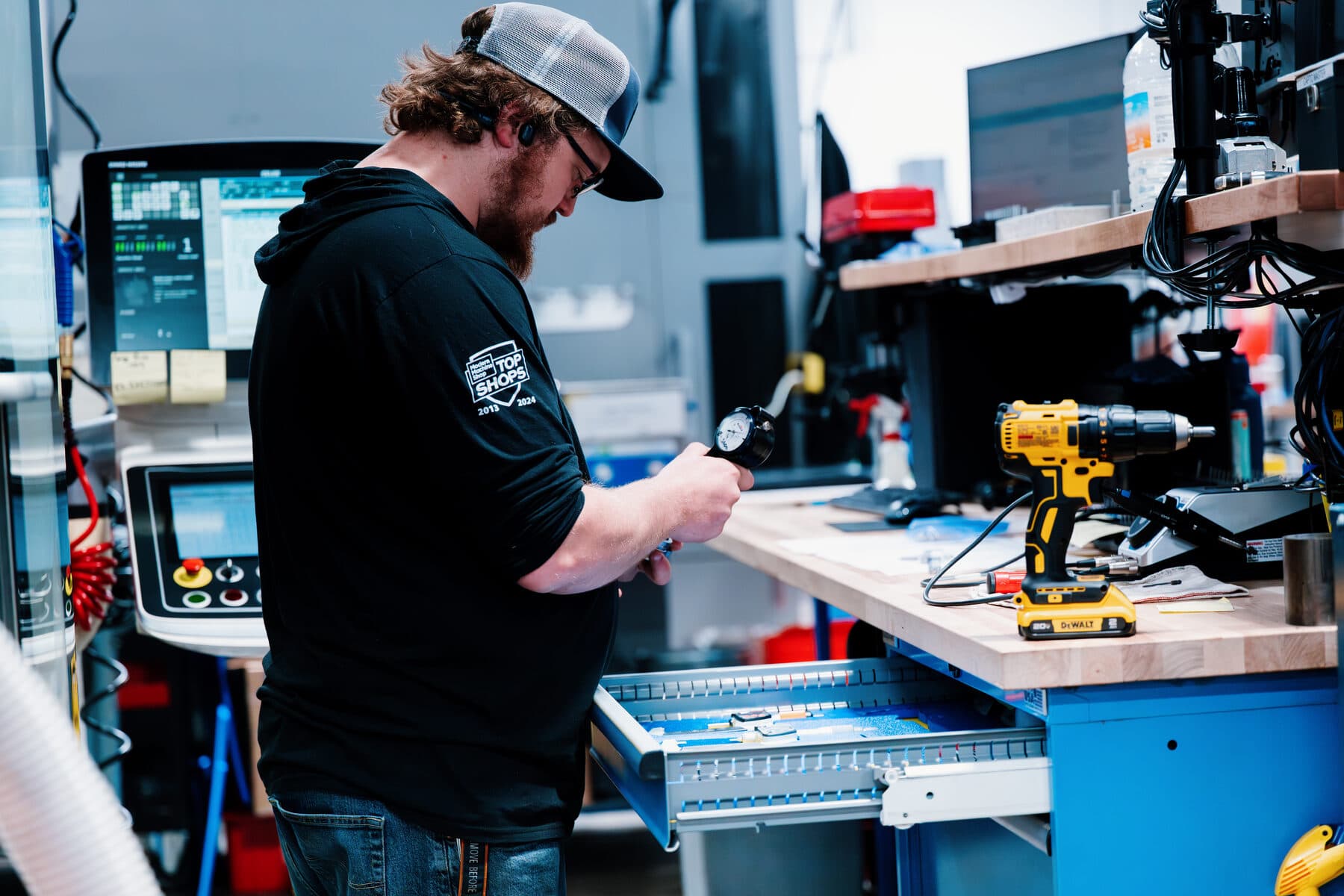
Each assembly moves through Standard Work Instructions developed from a 10-step PFMEA. Technicians analyze the same key characteristics in the same sequence on every unit. That prevention discipline sits inside an AS9100D-registered quality management system, where documented information, competent team members, calibrated equipment, and traceable verification records are not optional add-ons.
First-pass yield, DPMO at final inspection, and on-time delivery are the metrics buyers should bring to any assembly and testing supplier conversation, and the controlled-condition framework above is what allows a supplier to report them honestly.
Benefits of Contract Assembly and Testing With JD Machine
Fewer Handoffs, One Release Owner
We take work through machining, assembly, testing, and delivery under one quality system and one ERP, so one supplier owns the release record. This removes the coordination cost of stitching three vendors together and the audit risk of reconciling three different verification approaches on a single program.
Verification Built Into the Build, Not Bolted On
PFMEA-driven Standard Work Instructions identify failure modes before the first unit reaches the bench. Verification then confirms what the process already controls, instead of catching escapes at final test. Reliability of the released part traces back to a controlled assembly sequence, not a downstream sort.
Documentation Auditors Can Use
Released parts arrive with First Article Inspection records, in-process inspection data, and traceability tied to the SWI revision used during assembly. That evidence supports customer audits, surveillance, and corrective action under AS9100D registration without scrambling for documentation after the fact. Package integrity records, test data, and material certifications travel with every release.
Sustained Performance Under Aerospace Standards
According to the U.S. Bureau of Labor Statistics, aerospace product and parts manufacturing employs 22,280 inspectors, testers, sorters, samplers, and weighers at a mean annual wage of $65,810, which shows that verification is professionalized labor, not a commodity add-on. We staff our assembly and test floor accordingly, supported by the Machinist Apprenticeship and structured on-the-job training.
Single-Source Assembly and Testing vs. Multi-Vendor Handoff
Single-source assembly and testing and multi-vendor handoff models are both valid sourcing approaches. What matters is the program's release risk, audit exposure, and coordination cost, which supplier quality frameworks treat as core supplier-selection criteria.
| Decision Factor | Single-Source Assembly + Testing | Multi-Vendor Handoff Model |
|---|---|---|
| Release Accountability | One supplier owns the release record | Accountability splits across each vendor |
| Logistics and Handling | Parts move within one facility | Parts ship between facilities at each step |
| Verification Continuity | Verification ties to the assembly SWI | Each vendor verifies to its own criteria |
| Schedule Control | Schedule managed inside one ERP and capacity plan | Schedule depends on coordinated multi-vendor lead times |
| Best Fit | Regulated, high-spec, audit-driven programs | Programs requiring niche processes one supplier cannot perform |
Single-source wins when buyers need fewer handoffs, audit-ready documentation, and one owner of the release for aerospace, defense, or medical components, and it pairs naturally with Vendor Managed Inventory on recurring runs. Multi-vendor wins when a program legitimately needs specialty processes outside one supplier's scope and procurement has the capacity to coordinate the chain.
Source: JD Machine capability page; industry supplier quality guidance; AS9100 controlled-condition requirements
Assembly at Documented Hold Points
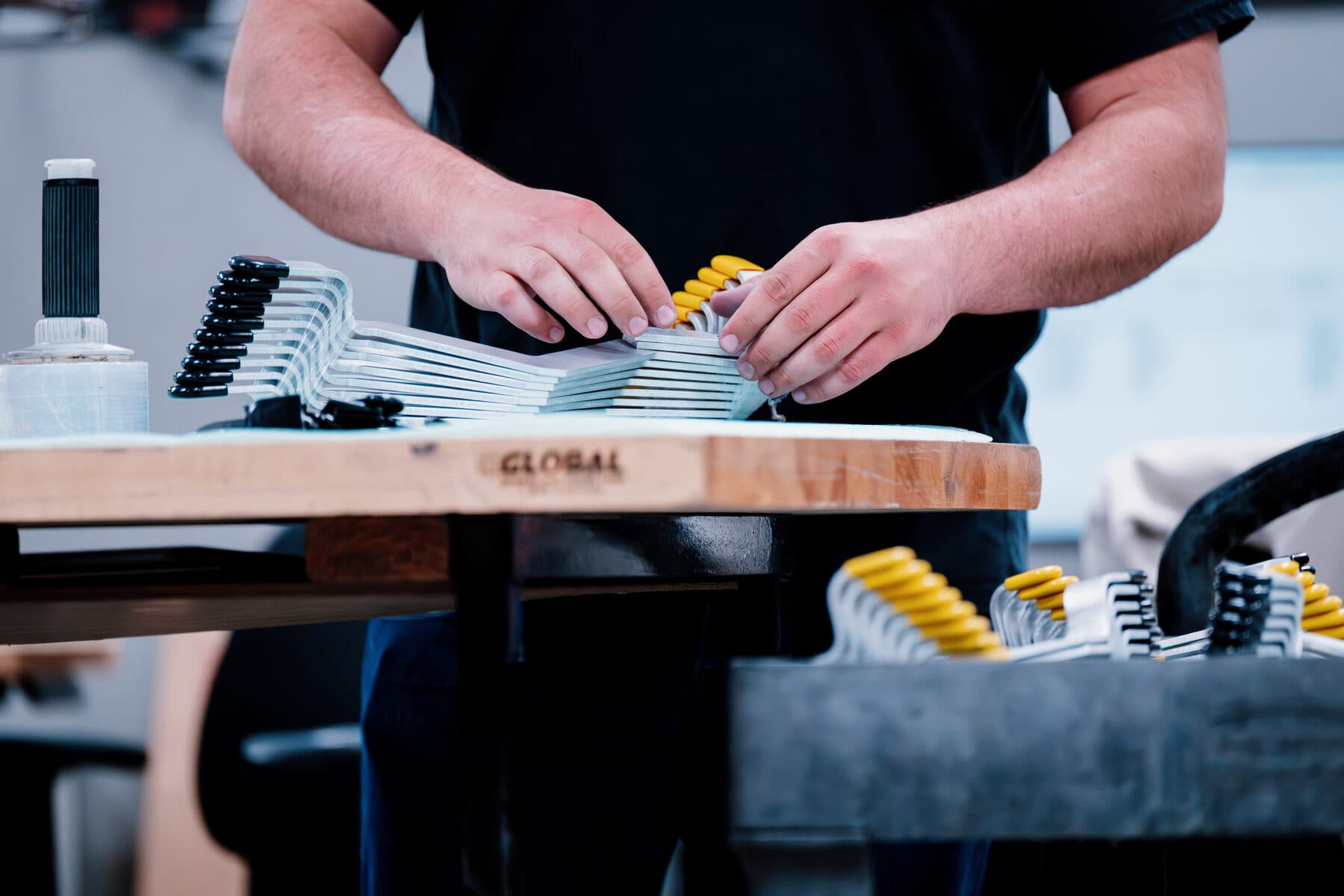
Technicians assemble machined and fabricated components under Standard Work Instructions developed from a 10-step PFMEA, with in-process inspection at defined hold points and calibrated equipment on every bench.
Who Needs Assembly and Testing Services
Programs and procurement scenarios that map cleanly to our intake fall into a handful of patterns.
Aerospace or Defense Program Launches
A buyer needs an AS9100D-registered and ITAR-cleared supplier to take machined and fabricated parts through final assembly, functional verification, and AS9102 First Article Inspection before shipment to the OEM, with documentation released against the production lot.
Switching From a Multi-Vendor Build Chain
A procurement team is consolidating away from separate machining, assembly, and testing vendors to reduce handoffs, logistics costs, and release-accountability gaps on a recurring production run, often after an escape or schedule miss exposed the cost of the split chain. Consolidation can also shorten development cycles by eliminating coordination delays between vendors.
CUI-Related or CMMC Compliant Activities
A defense OEM needs a supplier qualified for CMMC compliant activities and ITAR-controlled work to handle the program end-to-end, so machining, assembly, and testing do not get subcontracted to a non-qualified shop midway through the build. Data security and controlled access are non-negotiable requirements for these programs.
Medical, Energy, or Space Exploration Production Runs
A program manager needs documented verification on assemblies destined for the aerospace, defense, medical, and space exploration industries, where high-consequence environments and medium to high volume production runs make commodity contract assembly inadequate. These programs typically depend on advanced technologies and named test services that survive engineering review.
When Assembly and Testing Might NOT Be the Right Fit
Programs needing prototyping or single-unit builds are not a fit. JD Machine is set up for medium to high volume production runs and recurring lots, not prototype iteration or one-off design collaboration.
What to Expect: Our Assembly and Testing Process
Request a Quote
You submit a quote request with drawings, quantities, and program requirements, and receive a response within 24 hours.
Engineering and Process Planning
Our engineering team builds the CNC machining program, runs CAD/CAM simulation, and authors the SWI for assembly and test. This phase identifies the raw materials, test technologies, and verification methods needed to streamline processes from machining through final release.
Machining and Fabrication
Your machined and fabricated parts are produced inside the same facility that will assemble and test them, with material certifications maintained under controlled conditions.
In-House Assembly
Technicians follow the PFMEA-derived SWI to assemble units, with in-process inspection at the documented hold points. High-density assemblies are handled under the same controlled processes, with each assembly step verified against acceptance criteria.
Testing, Inspection, and Release
Pressure, helium leak, electrical conductivity, or functional tests run against acceptance criteria, and documentation ships with the parts. Each test verifies that devices function properly under the conditions specified in the engineering acceptance criteria.
Why Choose JD Machine
JD Machine has sustained a 99.6% customer quality rating over the last decade under an AS9100D and ISO 9001:2015 third-party registered quality management system. The same QMS that earns aerospace customer approvals on machined parts governs every assembly, every SWI revision, and every verification record produced on this floor. Reliability is the output of the system, not a slogan attached to it.
Assembly and testing is sometimes treated as a commodity add-on any shop can perform after the machining is done. PFMEA-led planning, named test types, in-process inspection at documented hold points, and FAI-ready documentation are not commodity outputs. They are the controlled conditions AS9100 requires, and they are what The JDM Difference is built on.
Ready to Consolidate Your Assembly and Test Program?
Our team typically responds within 24 hours.
(801) 782-4394Frequently Asked Questions
How much do assembly and testing services cost?
Assembly and testing services are quoted per program, with cost driven by quantities, materials, assembly complexity, test types, and documentation requirements. Pricing is quote-based because every program carries different drawings, tolerances, assembly steps, and verification criteria. Cost varies with material grade, the number and type of tests required (pressure, helium leak, electrical conductivity, functional), and the documentation package the customer needs. Quote responses typically come back within 24 hours.
What is the difference between single-source assembly and testing and using multiple vendors?
Single-source consolidates machining, assembly, and testing under one quality system and one release record, while multi-vendor handoffs split accountability across each supplier. Single-source reduces logistics, handling, and coordination costs because parts move within one facility instead of shipping between vendors at each step. Supplier quality frameworks identify five criteria beyond price: quality system, delivery capability, past performance, financial stability, and technical support. A single supplier carrying all five lowers the procurement team's evaluation burden. Multi-vendor models still make sense when a program needs specialty processes one supplier cannot perform.
What ongoing support does JD Machine provide after an assembly and testing program is set up?
JD Machine maintains version-controlled Standard Work Instructions, FAI records for repeat lots, and optional Vendor Managed Inventory for recurring replenishment. Once a program is qualified, the SWI revision used for first article carries forward to every recurring lot, with controlled change management when engineering revisions are released. FAI documentation supports repeat production without re-qualifying the process from scratch. For customers with recurring demand, Vendor Managed Inventory ties inventory replenishment and JIT/pull delivery directly into the assembly schedule.
What types of testing are included in assembly and testing services?
JD Machine performs pressure tests, helium leak tests, electrical conductivity tests, and functional testing against engineering acceptance criteria. Test types are selected during process planning based on the part's function and the customer's specification. Industry frameworks identify AOI, in-circuit test, flying probe, boundary scan, and final functional test as standard categories across the broader electronics assembly market, which gives buyers a vocabulary for scoping verification requirements. For machined and fabricated assemblies, pressure and helium leak testing typically verify seal integrity, electrical conductivity verifies bonding and grounding, and functional testing verifies end-use operation.
How do I choose an assembly and testing supplier for aerospace or defense work?
Evaluate the supplier's quality system registration, delivery performance, past performance on similar programs, financial stability, and technical support capacity. Supplier quality frameworks establish five criteria as the standard for supplier qualification, and aerospace and defense buyers add registration and clearance requirements on top. Confirm AS9100D registration for aerospace, ITAR registration for defense-controlled work, and CMMC Level 2 for any CUI-related projects. JD Machine holds AS9100D and ISO 9001:2015 registration, is ITAR-cleared, and operates under a CMMC Level 2 quality system.
What certifications should an assembly and testing provider have?
AS9100D for aerospace, ISO 9001:2015 for general manufacturing QMS, ITAR registration for defense-controlled work, and CMMC Level 2 for CUI-related projects. AS9100D is the aerospace quality management standard, built on top of ISO 9001:2015, and aerospace OEMs typically require registration as a flowdown condition. ITAR registration is required for any supplier handling defense-controlled technical data or articles. CMMC Level 2 is the Department of Defense cybersecurity certification required for handling Controlled Unclassified Information. JD Machine holds these certifications under third-party registration and assessment, with technology safeguards and controlled access built into every process.
Can one supplier handle machining, assembly, and final testing?
Yes, and JD Machine is structured for exactly that flow, with machining, fabrication, assembly, and testing performed inside one facility under one quality system. Single-source production eliminates the logistics and handling cost of moving parts between vendors and consolidates release accountability under one supplier. That model fits regulated programs with audit exposure and recurring lots, where verification continuity and documentation traceability matter more than spreading the work across multiple specialists.
What is first article inspection and when is it required?
First Article Inspection is a structured verification of the first production unit against every drawing requirement, typically documented per industry-recognized standards for aerospace. Structured inspection frameworks define documented inspection of the first article produced from a new or revised process, capturing every dimensional, material, and special-process requirement on the drawing. FAI is required when customer flowdown calls for it, which is standard for aerospace and defense programs and common for medical and high-consequence energy components. It is performed again after significant process or design changes.
What is included in JD Machine's 10-step PFMEA process?
JD Machine's testing team applies a 10-step Process Failure Mode and Effects Analysis to identify failure potential on each assembly before production shipment. PFMEA is a structured prevention method that maps each process step, identifies possible failure modes, scores severity, occurrence, and detection, and drives controls into the Standard Work Instructions before assembly begins. The output is a controlled SWI with the right hold points, the right verification methods, and the right documentation, so failures are prevented rather than caught after release.
What industries does JD Machine serve with assembly and testing services?
JD Machine serves aerospace, space exploration, defense, medical, energy, mining, and commercial industries with single-source assembly and testing. Each of these industries carries different verification expectations, documentation requirements, and regulatory flowdowns, which is why we built the assembly and test floor inside an AS9100D-registered QMS with ITAR clearance and CMMC Level 2 coverage. A full list of the industries we serve is available, and program-specific qualifications are confirmed during the quote process.