

Energy Industry Machining for Critical Components
JD Machine builds precision machining and fabrication for the energy sector from prototype through large-volume production under one roof — for downhole drilling tools, drivetrain components, and fluid-control parts under ISO 9001:2015 and AS9100D quality systems.
What Energy Manufacturers Need from a Machining Partner
Energy sector buyers evaluate CNC machining suppliers on more than tolerance specs — qualifying a partner means auditing the quality management system, the traceability chain, the difficult-alloy track record, and the inspection discipline behind every shipped lot. Per the U.S. Energy Information Administration, U.S. electricity use is forecast to grow 1% in 2026 and 3% in 2027, the strongest four-year growth period since 2000.
Oil & Gas: Pressure-Bearing Geometry
Oil and gas exploration operators need pressure-bearing geometry that holds in the field, not just parts that pass first inspection.
Wind: Drivetrain Precision
Wind manufacturers need drivetrain precision that survives gearbox load across the full duty cycle.
Power Generation: Repeatable Assemblies
Power generation buyers need repeatable assemblies that pass functional verification — the gap between a commodity shop and a vertically fluent supplier shows up first on the audit floor.
Energy Component Machining Challenges We Solve
Energy components operate under conditions general manufacturing customers never see. Energy production demands create significant advantages for suppliers who understand pressure ratings, thermal cycling, and field-condition testing.
Tight-Tolerance Sealing Surfaces
High pressure oil and gas components fail when sealing surfaces drift by tenths of a thou. We turn sealing surfaces on dual-spindle multi-turret centers with concentricity control.
Drivetrain Precision for Wind Components
Wind drivetrains convert 8-60 rpm input to roughly 1,800 rpm output, compounding small geometry errors. We mill drivetrain housings and shaft features on 4- and 5-axis cells with simulation-verified programs.
Pressure and Leak Integrity
Energy fluid-control parts must pass field-condition testing before they leave the floor. We pressure-test, helium leak-test, and conductivity-test in house under PFMEA-driven work instructions.
Prototype-to-Production Handoff Drift
First-article geometry rarely survives a vendor change at scale-up. We carry the same part from prototype through large-volume production on the same cells.
How We Build Energy Components
Each capability below is configured around the way energy sector buyers qualify suppliers, not the way a job-shop catalog reads. Our comprehensive range of CNC machining addresses precision parts across oil and gas, wind turbine, and power generation applications.
CNC Turning for Downhole and Fluid-Control Parts
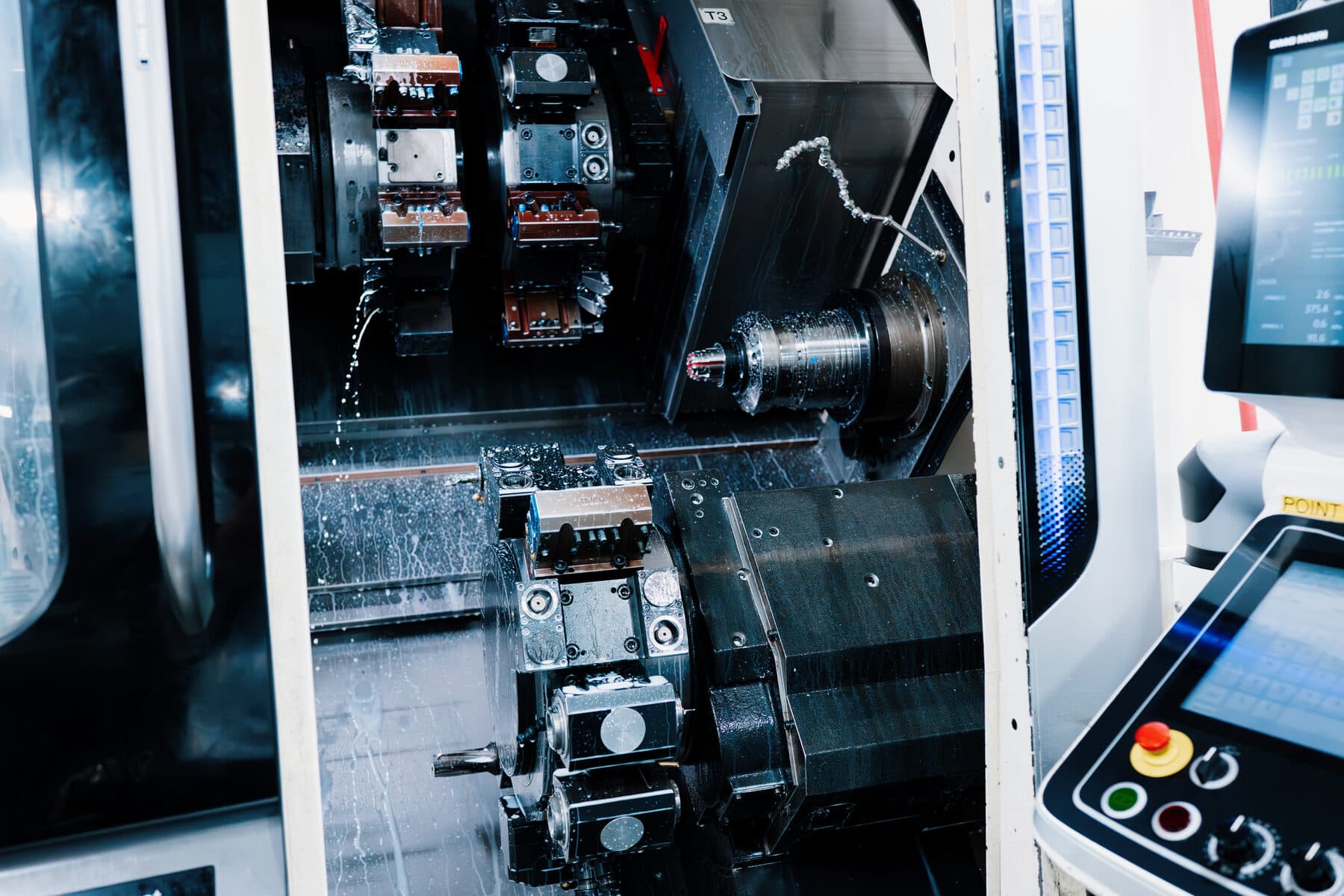
Dual-spindle multi-turret centers turn sealing surfaces, shafts, and high pressure geometries up to 12-inch OD in stainless, nickel-based alloys, and high-temp materials. Concentricity is held across families of parts so pressure ratings survive the field.
CNC Milling for Wind Drivetrain and Generator Components
4- and 5-axis CNC milling cells produce drivetrain housings, gearbox-related features, and generator components to tolerances of ±0.001″ in titanium, steel, and high-temp alloys. Programs are engineered offline through CAD/CAM and CNC simulation, so first-cut geometry matches the model.
Assembly and Testing for Pressure-Bearing Energy Hardware
In-house assembly and testing includes pressure tests, helium leak tests, and electrical conductivity testing under PFMEA-driven Standard Work Instructions. Functional verification happens before parts leave the floor.
Logistics and VMI for Repeat Energy Programs
Vendor Managed Inventory, JIT pull, and parts kitting carry qualified energy components from prototype through large-volume production without supplier handoff. The same systems, cells, and team members run the part end to end.
Why Energy Manufacturers Qualify JD Machine
Documented Systems, Not Spec Sheets
More than 500 U.S. manufacturing facilities specialize in wind turbine components, per the U.S. Department of Energy — buyers at that scale need documented systems. Our quality systems stack covers ISO 9001:2015, AS9100D, and ITAR registration.
One Team, Every Phase
Prototype, material testing, rapid tooling, and large-volume production run on the same floor by the same team. The supplier qualification you complete on day one still applies on lot one thousand.
Same Cells, First Article to Full Production
The same precision machining cells and team members carry your program from first article through full production — not a generic CNC vendor with an energy page and no proof.
Documented Quality at Energy-Industry Scale
JD Machine has sustained a 99.6% customer quality rating over the last decade while reducing manufacturing costs and minimizing lead times. ISO 9001:2015 and AS9100D registration is held through Amtivo, with active ITAR registration covering controlled work.
Named partnerships include Boeing Silver Supplier and ATK Supplier of the Year, reflecting execution in regulated industries adjacent to energy.
Capabilities Energy Programs Use
Machining, fabrication, assembly, and testing — under one roof, one quality system.
Precision CNC Machining
Dual-spindle turning and 4- and 5-axis milling for downhole, drivetrain, and generator components with tolerances to ±0.001″.
CNC MachiningAssembly & Testing
In-house mechanical assembly with PFMEA-driven Standard Work, pressure tests, and helium leak tests.
Assembly & TestingSheet Metal Fabrication
Thin-gauge precision punching and forming, with journey-level TIG welding for energy enclosures and brackets.
Sheet MetalOur Process for Energy Component Programs
Submit Your Quote
You send drawings, specs, and material requirements through our submit your quote form and receive a manufacturability review and quote response within 24 hours.
Qualify the Program
You review our quality system, certifications, and traceability process against the requirements for your energy component class.
Prototype and Verify
You receive first-article parts with material testing, dimensional verification, and rapid tooling adjustments before production release.
Scale to Production
You move from first article to large-volume production on the same machining cells with no supplier handoff between phases.
Replenish on Schedule
You hold inventory at your line through VMI, JIT pull, or kitted releases tied to your energy program schedule.
Bring Your Next Energy Program to JD Machine
Send drawings and material specs to start the supplier qualification conversation for your energy component program.
(801) 782-4394Energy Industry Machining Questions
How is CNC machining used in the renewable energy industry?
Renewable energy sector programs rely on CNC machining for wind drivetrain components, solar panel mounting hardware, and hydrogen system fittings that demand tight tolerances in difficult alloys. Wind, solar power, and hydrogen producers depend on precise components across structural, drivetrain, and fluid-control families. Wind turbine components include gearbox housings, shaft features, turbine blades, and generator hardware. Solar panels add precision brackets and tracker components. Hydrogen brings high pressure valve bodies and sealing surfaces. JD Machine produces these renewable energy systems components on the same cells that run our oil and gas exploration and power generation work.
What standards and quality systems do you operate under for energy components?
We operate under ISO 9001:2015 and AS9100D registered quality systems with active ITAR registration covering controlled work. Per OSHA, employers must control exposure to 5 mg/m³ for mineral oil mist and 15 mg/m³ for particulates not otherwise classified as 8-hour time-weighted averages, with OSHA referencing ANSI B11.23 for machining center safety. That is the regulated environment our cells operate inside every shift. Energy sector buyers auditing our floor see documented PFMEA, Standard Work Instructions, and material traceability tied to every lot.
Do you work with oil and gas, wind, and power generation manufacturers?
Yes. JD Machine produces components across all three energy subsegments, from downhole tools and valve bodies to drivetrain components and high pressure assemblies. Oil and gas exploration work covers downhole drilling equipment, fluid-control parts, and sealing surfaces in nickel-based and high-temp alloys. Wind covers drivetrain housings, gearbox components, and bearing housings. Power generation covers manifold and assembly work that needs functional verification. Every program runs prototype through large-volume energy manufacturing on the same floor with tight tolerances maintained through our documented systems.
What makes oil country machining different from standard CNC turning?
Oil country machining demands concentricity, sealing-surface integrity, and high pressure geometry in alloys that cut hard and resist conventional tooling strategies. Standard CNC turning treats geometry as the deliverable. Oil and gas exploration turning treats sealing surfaces and pressure ratings as the deliverable, with geometry as the path. Our dual-spindle multi-turret centers hold concentricity across part families, with material handling configured for the abrasive materials and high-temp alloys downhole work requires.
Can one supplier handle prototype, material testing, and full production runs for energy components?
Yes. JD Machine carries energy component programs from prototype, material testing, and rapid tooling into large-volume production under one roof. The alternative is a split supplier model where prototype, qualification, and production sit with separate vendors. That model rebuilds qualification risk at every handoff. First-article geometry that passed inspection at the prototype shop rarely survives a vendor change at scale, which extends program timelines and adds inspection cycles. Our precision manufacturing approach maintains material integrity from first article through mass production.
Should energy manufacturers choose a specialist machine shop or a generalist contract manufacturer?
The decision turns on qualification burden, not capacity. Energy components require a contract manufacturer with documented quality systems and regulated-industry execution history. Specialist shops can solve one part class but rarely carry the certification stack a regulated buyer needs. Generalist contract manufacturers with a mature QMS, AS9100D registration, and named partnerships in regulated industries match the qualification expectations critical components carry. JD Machine fits the second profile while staying fluent in energy-specific component families.
What is involved in switching to a new machining supplier for an existing energy program?
Switching involves an RFQ, drawing review, first-article inspection, material verification, and production release. The front-end cost of switching is usually the manufacturability review and first-article cycle. We compress that by responding to RFQs within 24 hours and running material testing alongside first-article inspection. Production release follows once dimensional and functional results match the qualification package.
How does JD Machine onboard a new energy component program?
Onboarding moves from drawings and material specs into a manufacturability review, then first-article and material testing, then production release with VMI or JIT replenishment. You send the package; we run review and quote within 24 hours. First articles ship with dimensional verification and material testing tied to the lot. Production release moves the part onto the same cells that ran the prototype, and replenishment runs against your schedule rather than ours.